Saudi Arabia’s construction landscape is shifting fast. Vision 2030 has unleashed a torrent of development activity that extends far beyond the gleaming megaprojects commanding international attention — into the distributed network of temporary construction sites, infrastructure works, utility installations, and rapid deployment projects that collectively represent the majority of the Kingdom’s concrete volume. These are not the sites with permanent batching plants, established access roads, and dedicated crane fleets. They are lean, fast-moving operations where equipment must deploy quickly, perform reliably in extreme conditions, and relocate without the logistical drama that large machinery demands.
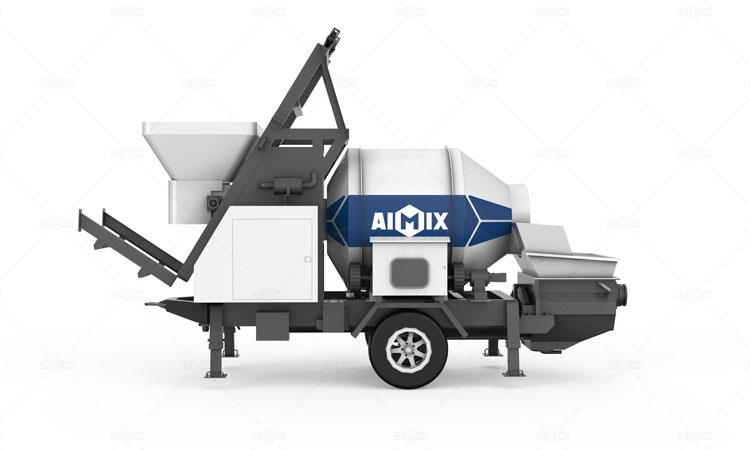
Mini concrete pumps have carved out a genuinely significant operational role in this environment. Compact, mobile, and surprisingly capable, these machines address the concrete placement challenges of temporary Saudi construction sites in ways that larger equipment cannot — and that manual methods, however labor-intensive, cannot match for output consistency or placement precision. The adaptation of mini concrete pumps to Saudi Arabia’s specific temporary site conditions is not a straightforward story of machines meeting specifications. It is a story of engineering evolution driven by operational reality — of machines that have been refined through deployment in one of the world’s most demanding construction climates until their capabilities align with what temporary site work in the Kingdom actually requires.
Thermal Resilience as the Non-Negotiable Performance Baseline
Let’s be direct about this: any piece of construction equipment operating in Saudi Arabia during summer months faces thermal conditions that would push standard machinery to its operational limits within hours. Mini concrete pumps in Saudi Arabia deployed on temporary sites face these conditions without the benefit of permanent infrastructure — no fixed shade structures, no grid power for supplementary cooling, no permanent water supply for heat management. The machine performs in ambient conditions as they exist, or it does not perform at all.
Engine and Hydraulic System Thermal Management in Field Conditions
Mini concrete pumps designed for Saudi temporary site deployment require engine cooling systems sized for high-ambient performance rather than temperate climate adequacy. This distinction matters enormously in practice. A pump whose cooling system maintains stable engine temperature at 25°C ambient may begin experiencing thermal protection interventions — reduced power output, automatic speed reduction, eventual shutdown — at the 45°C ambients that Saudi summer afternoons deliver routinely. These interventions do not announce themselves as equipment failures. They manifest as gradual output reduction and intermittent stoppages that operators attribute to other causes until the thermal pattern becomes unmistakable.
Hydraulic system thermal performance is equally critical. The hydraulic circuit drives both the pumping pistons and the S-valve or rock valve mechanism — the heart of the pump’s concrete delivery function. As hydraulic fluid temperature rises beyond its optimal viscosity range, pump efficiency drops, valve response slows, and wear rates on hydraulic components accelerate beyond their design parameters. Mini pumps specified for Saudi conditions incorporate oversized hydraulic oil coolers, high-temperature fluid formulations, and system architectures that maintain hydraulic temperatures within acceptable ranges across sustained full-load operation in extreme ambient conditions — not as optional upgrades but as baseline engineering requirements.
Concrete Workability Preservation at Point of Placement
Temporary sites in Saudi Arabia frequently lack the chilled water infrastructure and shade structures that permanent plant operations use to manage fresh concrete temperature. Mini pump deployments on these sites must account for the workability compression that ambient heat imposes — the accelerated cement hydration that consumes workability at rates that concrete batched for 90-minute placement windows at moderate temperatures cannot sustain in Saudi summer conditions.
The practical response involves coordinating pump deployment with concrete supply timing more precisely than temperate climate practice requires. Shorter haul distances from batching source to pump, rapid transfer from mixer to pump hopper, and placement sequences that minimize time between pump discharge and consolidation become operational disciplines rather than best-practice recommendations. Mini pumps with hopper agitation systems that maintain fresh concrete in active motion during brief supply gaps — preventing localized stiffening at the pump intake that causes blockages — demonstrate a climate-specific operational advantage that machines without this feature cannot match in Saudi temporary site conditions.
Mobility Architecture That Matches Temporary Site Access Realities
Temporary construction sites in Saudi Arabia do not conform to the access assumptions that equipment manufacturers designing for European or North American markets build into their mobility specifications. Established road surfaces, level ground, and predictable approach gradients are not the access conditions that a utility installation crew in Riyadh’s expanding suburbs or an infrastructure works team in the Eastern Province desert encounters. Mini pump mobility must be evaluated against what temporary Saudi sites actually present — not against idealized access scenarios.
Compact Footprint and Ground Condition Performance
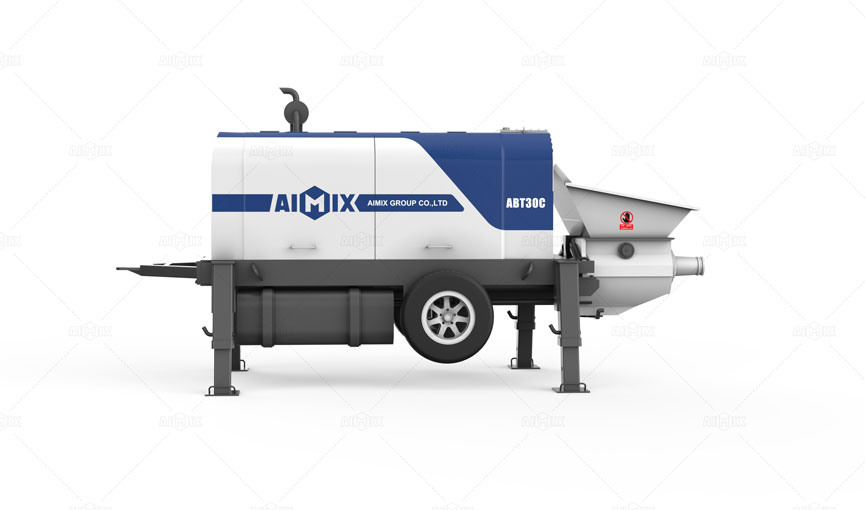
The compact footprint of mini concrete pumps — their ability to access confined areas, negotiate narrow site approaches, and position close to placement zones without requiring the cleared operating radius that larger equipment demands — is their most immediately visible mobility advantage on temporary sites. A pump that can be maneuvered into position through a gate opening that would exclude a truck-mounted boom pump, set up on an unprepared sand surface, and begin pumping within thirty minutes of arrival is not merely convenient. It is operationally transformative for site teams whose productivity depends on concrete placement commencing without a preceding equipment access engineering exercise.
Ground condition performance deserves specific attention in the Saudi context. Desert sand and compacted laterite surfaces present very different bearing capacity profiles from the prepared ground that European construction site norms assume. Small concrete pumps with low ground pressure outrigger configurations — spreading stabilization loads across pad areas sized for soft ground deployment — maintain operational stability on the surface conditions that temporary Saudi sites present without requiring ground preparation works that would negate the mobility advantage the pump provides. This is not a marginal specification detail. It is a practical enabler of the rapid deployment capability that temporary site work demands.
Setup and Teardown Speed as a Competitive Operational Parameter
Temporary construction sites move. The infrastructure utility installation that requires a pump today shifts to a new location tomorrow. The foundation pour in one district completes, and the next scheduled pour is thirty kilometers away. Mini concrete pump operational value on temporary Saudi sites is therefore measured not just by pumping performance during deployment but by the total time from arrival at one location to productive operation at the next — a metric that setup complexity and teardown requirements determine as directly as transit speed.
Mini pumps designed for high-frequency relocation minimize setup complexity through intelligent mechanical design — hydraulic outrigger extension rather than manual leveling, single-operator pipeline connection systems, and service access points positioned for rapid inspection without major disassembly. These design features do not appear as headline specifications in equipment comparisons, but they are the details that experienced temporary site operators recognize as the difference between a pump that earns its deployment cost and one that consumes excessive setup time before every productive shift. In Saudi Arabia’s project-driven temporary site environment, where mobilization efficiency directly affects project schedule performance, this distinction has genuine commercial significance.
Dust Protection and Filtration Systems for Desert Deployment
Saudi desert environments deliver airborne particulate concentrations that push standard construction equipment filtration systems toward their operational limits. Fine silica sand — the dominant particulate in Saudi desert air — is among the most abrasive materials that engine intake systems, hydraulic circuits, and electrical enclosures encounter. Mini concrete pumps operating on temporary sites without established dust suppression infrastructure face sustained exposure to particulate concentrations that accelerate every wear mechanism the machine possesses.
Engine Air Filtration for Sustained Desert Operation
Engine air filtration on mini pumps deployed in Saudi desert conditions requires multi-stage architecture that single-stage primary filter configurations cannot adequately provide. Pre-cleaner systems using centrifugal separation remove the bulk coarse and medium fraction before it reaches the primary filter element — extending primary filter service intervals dramatically compared to unprotected single-stage systems and maintaining filter restriction within the range that preserves engine volumetric efficiency and power output. In high-dust temporary site conditions where filter loading rates can be ten to twenty times higher than moderate-dust environments, the difference between adequate and inadequate filtration architecture manifests in engine wear rates and service interval economics that compound significantly across operational years.
Filter condition monitoring — providing real-time restriction indication rather than relying on time-based service intervals — is particularly valuable in temporary site deployments where dust loading varies dramatically with site activity level and wind conditions. A pump deployed on an active demolition site adjacent to earthworks activity faces dust loading that would saturate a primary filter element in hours rather than the days or weeks that calmer conditions allow. Real-time monitoring ensures that filter service responds to actual loading conditions rather than schedule assumptions that may dramatically underestimate particulate accumulation rates in the most challenging temporary site environments.
Electrical Enclosure and Control System Protection
The control system of a mini concrete pump for sale — managing pumping sequence, pressure monitoring, blockage detection, and operator interface functions — represents the machine’s operational intelligence. Dust ingression into control enclosures contaminates electrical contacts, creates tracking paths between circuit conductors, and progressively degrades the reliability of the sensing and switching functions that safe and productive pump operation depends on. Standard IP ratings provide a baseline level of ingress protection that may be adequate for moderate environments but requires augmentation for sustained Saudi desert deployment.
Positively pressurized control enclosures — maintaining slight positive internal pressure through filtered air supply — provide reliable dust exclusion regardless of enclosure seal condition, eliminating the progressive contamination that seal degradation allows in standard enclosure designs. Combined with conformal coating on circuit boards and corrosion-inhibiting treatment on electrical terminal connections, positive pressure enclosure systems maintain control system reliability across the sustained desert exposure that temporary Saudi site deployment imposes. These are not glamorous engineering features. They are the unglamorous foundations of operational reliability in conditions where unreliable control systems translate directly into production stoppages at the worst possible moments.