Operating a 40-ton gantry crane in winter environments presents a unique set of technical and safety challenges. Snow, ice, freezing temperatures, and reduced visibility can significantly affect crane stability, mechanical performance, braking systems, and operator decision-making. Without proper preparation, these conditions can lead to equipment failures, production delays, and serious safety risks.
This article outlines best practices for safely and efficiently operating 40 ton gantry cranes in snow and ice conditions, focusing on operational procedures, equipment protection, maintenance strategies, and operator training.
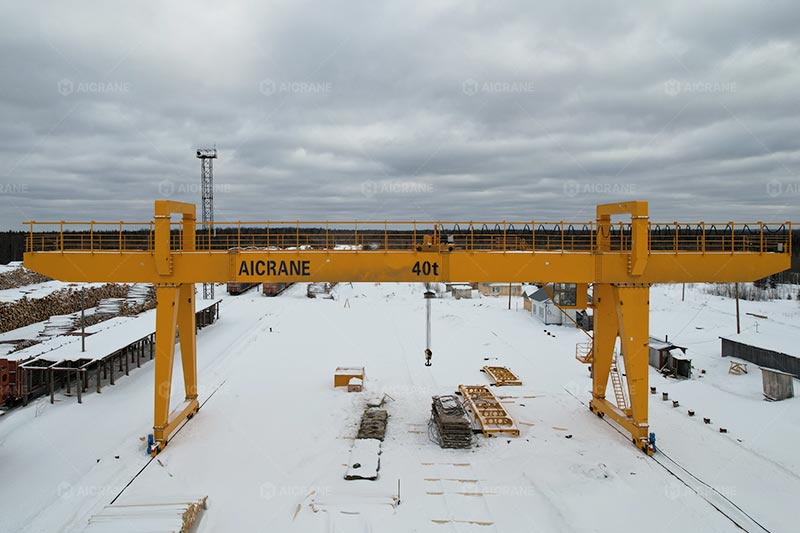
1. Understanding Winter Operation Risks for Gantry Cranes
Before implementing solutions, it is important to understand how snow and ice affect gantry crane systems.
1.1 Reduced Friction and Traction
Rubber-tyred or rail mounted gantry cranes rely heavily on stable ground or rail conditions. Ice formation reduces friction, increasing the risk of:
- Wheel slippage
- Reduced braking efficiency
- Uncontrolled movement during starting or stopping
1.2 Mechanical Freezing
Moisture can freeze in:
- Wire ropes
- Gearboxes
- Brake assemblies
- Hydraulic systems
This can lead to delayed response or mechanical failure.
1.3 Increased Structural Load
Snow accumulation on:
- Main beams
- End carriages
- Trolley systems
adds additional weight that may stress structural components beyond design expectations.
1.4 Electrical System Failures
Low temperatures can cause:
- Cable stiffening and cracking
- Sensor malfunctions
- Condensation inside control cabinets
- Reduced battery efficiency (for RTG systems)
2. Pre-Operation Winter Preparation
Proper preparation is essential before operating an overhead gantry crane in freezing conditions.
2.1 Snow and Ice Removal Before Operation
Always ensure:
- Crane runway or working area is cleared of snow
- Ice is removed from rails or tire paths
- Drainage systems are functional to prevent refreezing
Mechanical snow blowers or heated rail systems may be necessary for heavy-duty operations.
2.2 Pre-Heating Mechanical Systems
Key components should be warmed up before operation:
- Gearboxes
- Hydraulic systems
- Control cabinets
This prevents sudden stress on lubricants and seals.
2.3 Lubrication for Low Temperatures
Standard grease may thicken in cold environments. Use:
- Low-temperature synthetic lubricants
- Cold-resistant hydraulic oil
- Anti-freeze additives for exposed components
Proper lubrication ensures smooth movement of hoists, trolleys, and gantry drives.
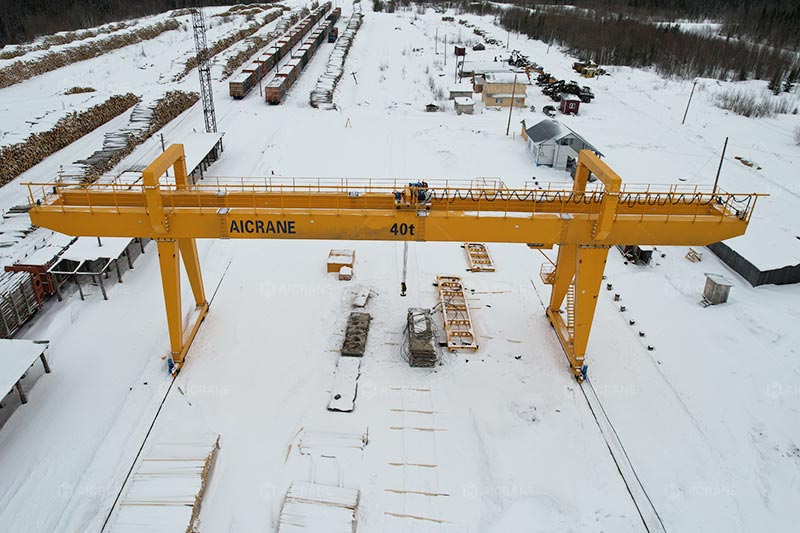
3. Safe Operating Procedures in Snow and Ice
3.1 Gradual Start-Up and Acceleration
Avoid sudden movements. Operators should:
- Start at low speeds
- Gradually increase acceleration
- Avoid abrupt braking or directional changes
This reduces the risk of slipping or mechanical shock.
3.2 Load Handling Adjustments
In winter conditions:
- Reduce travel speed when carrying loads
- Avoid swinging loads in windy or icy conditions
- Increase safety margin for rated load utilization
Even though a 40-ton gantry crane is designed for heavy lifting, winter conditions effectively reduce operational safety margins.
3.3 Continuous Monitoring of Wheel and Rail Conditions
Operators should frequently check:
- Ice buildup on wheels or rails
- Uneven snow accumulation
- Wheel slip indicators (if installed)
Immediate corrective action should be taken if slippage is detected.
4. Anti-Slip and Anti-Icing Measures
4.1 Rail Heating Systems (for RMG/rail-mounted cranes)
Installing electric rail heaters helps:
- Prevent ice formation
- Maintain consistent traction
- Reduce downtime during freezing weather
4.2 Tire Chain or Anti-Slip Systems (for RTG cranes)
For rubber tyred gantry cranes:
- Snow chains or studded tires can improve traction
- Anti-slip coatings may be applied in extreme conditions
4.3 Chemical Ice Prevention (Used Carefully)
In some environments, de-icing agents can be applied:
- Magnesium chloride or calcium-based solutions
- Must be compatible with crane materials to avoid corrosion
5. Structural Integrity Management in Snow Conditions
5.1 Snow Load Removal
Snow accumulation on crane structures must be regularly removed from:
- Main girders
- Catwalks and platforms
- Cable trays
Excess snow adds unnecessary static load and may affect crane balance.
5.2 Inspection for Ice-Induced Stress
Operators and maintenance teams should inspect:
- Weld joints for stress cracks
- Bolted connections for loosening
- Deformation in structural members
Cold temperatures can make steel more brittle, increasing the risk of fatigue failure.
6. Electrical and Control System Protection
6.1 Enclosure Heating Systems
Control cabinets should be equipped with:
- Anti-condensation heaters
- Thermostatic control systems
- Insulated enclosures
This prevents moisture freezing inside electrical components.
6.2 Cable Management in Cold Weather
- Use cold-resistant cables
- Prevent cable stiffness and cracking
- Ensure proper cable drum operation in low temperatures
6.3 Sensor Reliability
Sensors such as:
- Load cells
- Limit switches
- Anti-collision systems
must be checked regularly, as ice or condensation can interfere with accuracy.
7. Operator Training for Winter Conditions
Proper training is one of the most important safety factors.
Operators should be trained to:
- Recognize early signs of ice-related malfunction
- Adjust speed and load handling in winter conditions
- Respond to emergency stop scenarios on slippery surfaces
- Conduct daily pre-operation inspections
Simulated winter training environments can significantly improve operator response times.
8. Maintenance Strategy for Winter Operation
8.1 Daily Maintenance Checks
- Inspect brakes for ice contamination
- Check oil viscosity and hydraulic response
- Remove snow accumulation from moving parts
8.2 Weekly Preventive Maintenance
- Test all safety limit switches
- Inspect gearboxes for abnormal noise
- Verify structural integrity under cold stress
8.3 Emergency Maintenance Planning
Facilities operating in extreme climates should maintain:
- Spare heating elements
- Backup hydraulic fluid
- Emergency de-icing equipment
9. Wind and Visibility Considerations in Snowstorms
Snow conditions are often accompanied by strong winds and reduced visibility.
9.1 Wind Speed Monitoring
Gantry crane operations should be suspended when:
- Wind exceeds safe operational limits
- Load sway becomes uncontrollable
9.2 Visibility Protocols
- Use high-intensity LED lighting
- Implement communication systems between signalers and operators
- Avoid night operations during heavy snowfall when possible
10. Emergency Response Planning
Even with precautions, emergencies may occur.
10.1 Common Winter Emergencies
- Brake freezing
- Load slippage
- Electrical short circuits due to moisture
- Crane immobilization due to ice buildup
10.2 Emergency Procedures
Operators must be trained to:
- Safely lower suspended loads
- Shut down power systems safely
- Activate manual override systems if necessary
Clear emergency protocols reduce accident severity.
11. Long-Term Design Considerations for Cold Regions
For cranes permanently operating in snow-prone areas, design upgrades should be considered:
- Arctic-grade steel materials
- Enclosed driver cabins with heating
- Fully insulated electrical systems
- Integrated rail heating systems
- Weatherproof paint coatings to prevent corrosion
Investing in cold-climate design significantly reduces long-term operational risks.
Conclusion
Operating a 40-ton gantry crane in snow and ice conditions requires a combination of technical preparation, strict operational discipline, and enhanced maintenance strategies. The challenges posed by freezing temperatures and slippery surfaces directly affect crane safety, efficiency, and structural reliability.
By implementing proper winterization measures—such as anti-icing systems, low-temperature lubricants, pre-heating equipment, and specialized operator training—companies can maintain safe and continuous lifting operations even in harsh winter environments.
Ultimately, winter crane operation is not just about handling equipment in cold weather; it is about building a comprehensive safety system that ensures performance, reliability, and long-term structural integrity.