Operating a construction site in the arid regions of Latin America presents unique challenges that traditional building methods often struggle to overcome. From the desert coastlines of the Pacific to high-altitude Andean plains, water scarcity and extreme evaporation rates directly threaten concrete quality and project timelines. For contractors working in these harsh environments, achieving the correct water-to-cement ratio is a constant struggle. Standard transit mixers often find it difficult to navigate remote terrains while keeping a fresh mix from drying out prematurely.
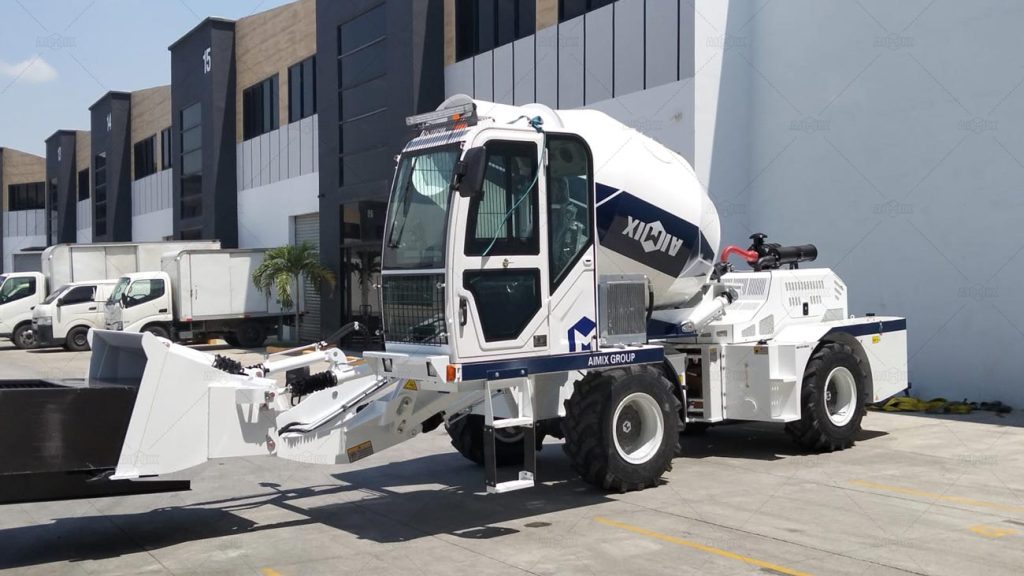
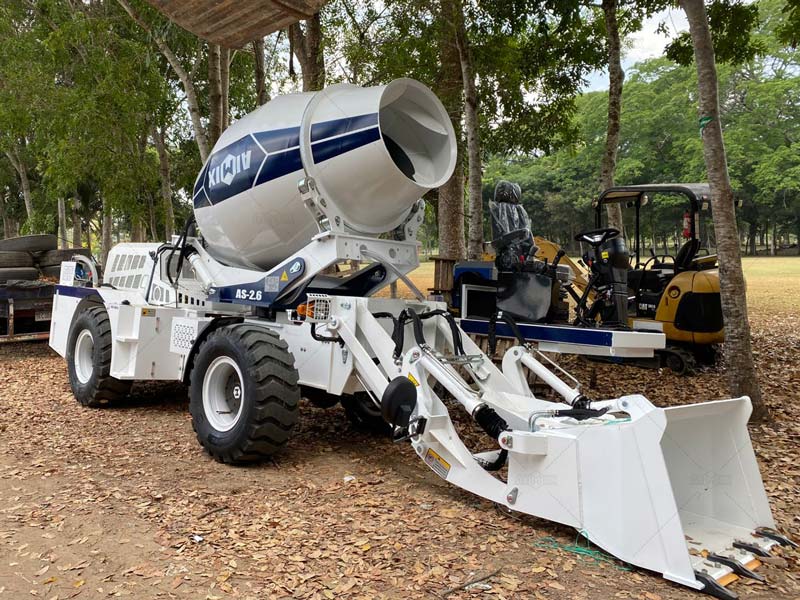
To combat these environmental hurdles, regional contractors are shifting toward self-contained, highly automated machinery. The self-loading concrete mixer(hormigonera autocargante) has emerged as a vital tool for off-grid and arid infrastructure development. By combining an aggregate loader, a weighing system, a mixing drum, and a transit vehicle onto a single off-road chassis, this machine functions as a mobile batching plant. However, its most critical feature in dry climates is the integration of high-precision automatic water supply systems, which guarantee batch consistency despite soaring ambient temperatures.
Water Scarcity and the Challenges of Remote Batching
In hot, dry regions, concrete production becomes a race against time. High temperatures accelerate the hydration process of cement, causing the fresh mix to lose workability rapidly. If too much water evaporates during mixing or transit, the resulting concrete becomes brittle, develops structural cracks, and fails to meet strict civil engineering standards. Conversely, manually adding unmeasured water on-site to restore workability weakens the final compressive strength of the structure.
An automated, high-precision self-loading concrete mixer solves this issue through computerized water management. Instead of relying on an operator’s visual guesswork, these machines use integrated water pumps coupled with digital flow meters. The system automatically calculates and injects the exact volume of water required for the specific recipe programmed into the batch computer. This tight control ensures that every batch maintains the precise water-cement ratio needed for maximum structural durability, even when operating under a blazing desert sun.
Evaluating Different Models of Self-Loading Concrete Mixer
Firms must carefully analyze operational demands when choosing between various models of self-loading concrete mixer. Manufacturers offer these machines in a wide range of drum capacities, usually measured in output per batch, ranging from compact 1.2-cubic-meter units up to heavy-duty 5.5-cubic-meter powerhouses. Selecting the right model depends on the physical constraints of the job site and the required daily concrete volume.
When looking at the popular models of self-loading concrete mixer favored in arid zones, two distinct categories stand out:
- Compact Models (1.2m³ to 2.6m³): Ideal for localized municipal repairs, remote cellular tower foundations, and narrow mountain pathways where maneuvering space is highly restricted.
- High-Capacity Models (3.5m³ to 5.5m³): Tailored for substantial infrastructure projects such as rural highway bridges, desert irrigation canals, and large industrial warehouses.
Regardless of total drum size, the presence of an automated water dosing system is a non-negotiable feature for dry-climate operations, as it prevents the batch from seizing up during the rapid mixing cycles required in high-heat environments.
Operational Case Study: The Self-Loading Concrete Mixer in Peru
The practical value of these automated water systems is clearly visible when examining the performance of a self-loading concrete mixer in Peru(autohormigonera en Perú). The Peruvian coast features some of the driest desert landscapes in the world, while its interior consists of high-altitude, low-humidity mountain ranges. Transporting ready-mix concrete from urban centers to remote mining sites or rural community centers across these terrains is logistically impossible.
Contractors utilizing a self-loading concrete mixer in Peru can load local dry aggregates and cement directly at the construction site. The machine then draws water from an onboard tank or an external local source, utilizing its high-pressure pump to meter out the exact hydration requirements. This localized, precise batching eliminates transit-time risks completely, allowing Peruvian builders to complete high-altitude retaining walls and coastal foundations with the same strength consistency found in major metropolitan laboratories.
Balancing Procurement Budgets: Analyzing the Self-Loading Concrete Mixer Price
When expanding an equipment fleet, procurement managers must evaluate the upfront self-loading concrete mixer price against the long-term operational savings generated on-site. While basic, manually operated machinery might carry a lower entry cost, the inclusion of automated weighing scales and digital water flow systems represents an investment that protects the project’s bottom line.
The table below highlights how the automated systems included in the premium self-loading concrete mixer price directly optimize project budgets in arid regions:
| Machine System | Impact on Self-Loading Concrete Mixer Price | Arid-Zone Budgetary Savings |
|---|---|---|
| Digital Flow Meters & High-Pressure Water Pumps | Moderately increases upfront configuration costs. | Eliminates water waste; prevents rejected, dried-out concrete batches. |
| Four-Wheel Drive & 270-Degree Slewing Drum | Higher mechanical engineering premium. | Reduces the need for auxiliary transport trucks and onsite concrete pumps. |
| Automated Electronic Weighing Batch Computer | Increases software and sensor configuration costs. | Ensures zero cement or aggregate overruns, optimizing raw material expenses. |
Over the course of a single major project, the reduction in spoiled concrete batches and minimized water consumption easily offsets a premium self-loading concrete mixer price(autohormigonera premium precio). Contractors save significantly on raw materials, haulage logistics, and labor hours, ensuring a rapid return on investment.
Optimizing Resource Management for Long-Term Success
As sustainability regulations tighten and water resources become scarcer across Latin America, the construction industry must adapt by adopting water-efficient technologies. Operating a fleet with precise water management capabilities allows contractors to fulfill strict environmental compliance standards while maintaining high productivity. By integrating advanced models of self-loading concrete mixer(modelos diversos de autohormigonera) equipped with computerized water supply controls, construction companies protect themselves against material waste and environmental penalties.
The ability to batch concrete reliably in the middle of a desert without depending on large, external water infrastructure gives modern contractors a massive competitive edge. These agile, self-contained mixing units ensure that infrastructure development can continue moving forward efficiently, transforming remote and arid landscapes into connected, resilient communities.