Boat lift cranes—commonly referred to as travel lifts, mobile boat hoists, or marina straddle cranes – are specialized pieces of heavy lifting equipment used in modern marinas, shipyards, and commercial boatyards. Because yachts and powerboats feature complex hull geometries, sensitive underwater propulsion systems, and high asset values, operating a mobile boat hoist requires strict adherence to standard operating procedures.
This comprehensive guide outlines the end-to-end operational workflow for launching a boat safely, starting from the moment the vessel arrives at the lifting well bay (lift slip) through to post-operation dry-docking maintenance. Incorporating these standardized safety steps helps marina operations teams prevent equipment damage, protect personnel, and maintain an efficient boatyard workflow.
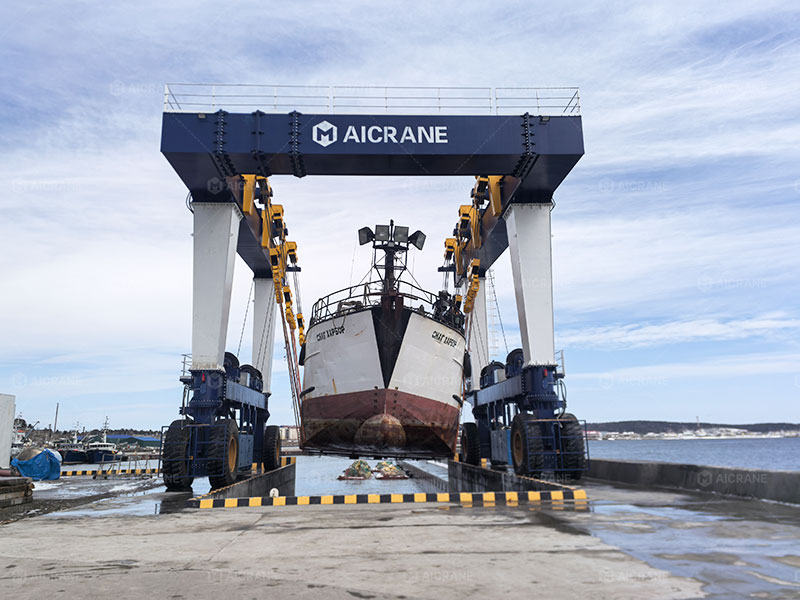
1. Pre-Operation Preparation and Equipment Inspection
Before bringing any vessel near the lifting area, operators must verify environmental conditions, perform a routine inspection on the mobile boat hoist, and align the ground crew.
1.1 Environmental and Site Conditions Verification
- Weather Monitoring: Check local wind speeds, visibility, and weather advisories. Operations should be suspended during heavy rain, thunderstorm warnings, dense fog, or when sustained winds exceed the manufacturer’s safe operational threshold (typically 20–25 knots or 10–12 m/s).
- Waterway Depth Verification: Confirm that the water depth inside the lift slip (lifting well bay) is sufficient for the vessel’s draft at the current tide level. Ensure the launch bay is clear of floating debris, loose ropes, or submerged obstructions.
- Travel Path and Ground Stability: Inspect the apron and travel runways. Clear away any tools, vehicles, or equipment blocking the path of the rubber-tired gantry crane. Verify that the concrete or asphalt runway is structurally sound, level, and free of significant standing water or cracking.
1.2 Routine Crane Inspection
Before starting the engine or engaging hydraulic systems, perform a visual and functional check of the boat lift crane:
- Structural Framework: Inspect the main gantry beams, side columns, and cross-members for visible cracks, rust patches, or loose bolt connections.
- Hydraulic and Power Systems: Check hydraulic fluid levels, engine oil, and fuel levels. Inspect hoses, valves, and cylinders for active fluid leaks. Start the engine to verify system pressure gauges show normal operating ranges.
- Wire Ropes and Lifting Slings: Examine all steel wire ropes for fraying, broken strands, corrosion, or severe twisting. Inspect high-strength synthetic web slings for cuts, edge tears, stitching degradation, or chemical damage.
- Safety Devices: Test the emergency stop buttons, travel limit switches, overload sensors, and audible/visual alarms to ensure full functionality.
1.3 Crew Allocation and Communication Protocols
- Role Assignments: A standard lifting operation requires at least one primary crane operator, one designated signal person (banksman), and two ground/dock spotters.
- Communication Standards: Reaffirm standard hand signals or test hand-held VHF/UHF radios before moving the equipment. Clear, unambiguous communication prevents misinterpretation during critical maneuvers.
2. Vessel Arrival and Positioning
Proper vessel positioning minimizes the risk of structural stress on the hull during the initial rigging process.
2.1 Navigating into the Lift Slip (Well Bay)
- Controlled Approach: Instruct the vessel captain to enter the lift slip at dead slow speed, keeping the boat centered between the pier walls.
- Temporary Mooring: Secure the vessel to cleats or bollards on both sides of the slip using temporary spring and breast lines to prevent drifting due to wind or current.
- Engine Shutdown: Once the vessel is stationary, the captain must shut down all main engines, generators, and auxiliary electronics. All passengers and non-essential crew should step ashore. Anyone remaining on board for inspection purposes must wear an approved personal flotation device (PFD).
2.2 Verifying Specifications and Hull Lifting Points
- Weight and Load Capacity: Cross-reference the vessel’s actual total weight (including fuel, water, and gear) against the Safe Working Load (SWL) rating of the mobile boat hoist. Never operate near or over the rated capacity limit.
- Identifying Sling Marks: Locate the factory-designated sling placement markers (“Sling Marks”) on the hull sides. If markers are missing or painted over, consult the manufacturer’s structural drawings to identify internal bulkheads and structural transverse frames.
- Avoiding Underwater Components: Verify that the proposed sling locations avoid vulnerable underwater fittings, including drive shafts, propellers, rudders, stabilizer fins, bow/stern thrusters, and thru-hull transducers.
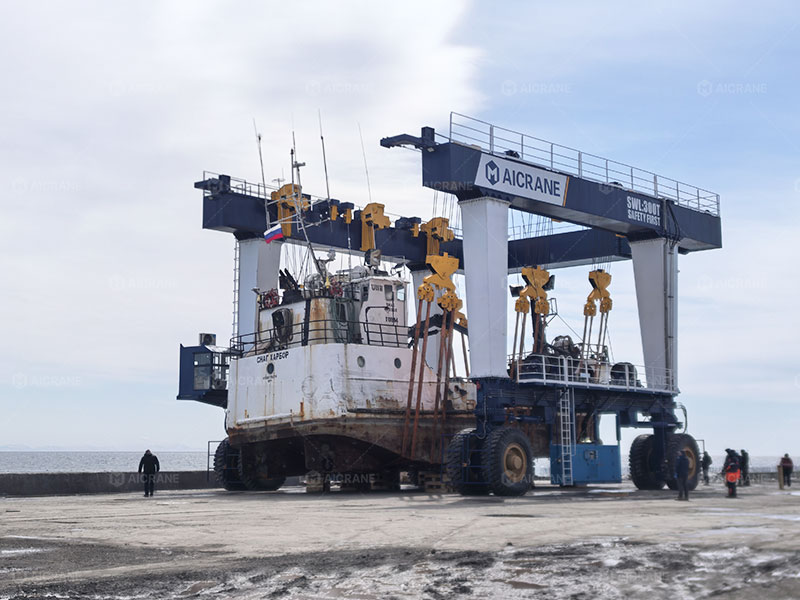
3. Rigging Selection and Sling Placement
Correct rigging configuration ensures even weight distribution across the marine straddle carrier structure and protects the vessel’s gelcoat and finish.
3.1 Sling Selection and Configuration
- Rating and Length: Choose synthetic web slings rated appropriately for the vessel’s displacement. Ensure the length of the slings allows for a balanced lift without excessive angles.
- Spreader Bars: Use top spreader bars or adjust the upper beam width if the vessel features a wide beam or delicate superstructure. This prevents the lifting slings from squeezing inward against the topsides or rub rails.
3.2 Position and Protection
- Under-Hull Placement: Pass the slings under the hull, ensuring they lie completely flat against the bottom without twists, folds, or inverted edges.
- Protective Chafing Pads: Insert heavy-duty rubber or neoprene protective pads between the sling fabric and sharp corners, chine edges, spray rails, or rub rails. This prevents friction damage to both the boat’s gelcoat and the sling material.
- Center of Gravity Alignment: Position the forward and aft slings so that the boat’s center of gravity lies balanced between them. Typically, the aft sling is placed slightly closer to the engine compartment (where weight is concentrated), while the forward sling supports the bow section.
4. Lifting and Transfer Process
Lifting and moving the vessel requires smooth controls to avoid dynamic loading spikes and hull sway.
4.1 The Trial Lift (10–15 cm Elevation)
- Initial Tension: Slowly hoist the slings until they take up slack and seat firmly against the bottom of the hull.
- Low-Height Pause: Lift the vessel roughly 10 to 15 centimeters off its support blocks or out of the water, then pause the lift to perform the following checks:
- Trim and Balance: Verify that the vessel sits level fore-and-aft and port-to-starboard. If the vessel tilts unacceptably, lower it immediately and adjust the sling positions or upper hoist points.
- Sling and Pad Inspection: Confirm that chafing pads remain in place and that the slings are not pressing against shafts, rudders, or transducers.
- Brake Hold Test: Verify that the hoist winches and mechanical brakes hold the load securely without slippage.
4.2 Smooth Hoisting and Traversal
- Vertical Elevation: Elevate the vessel to a height that safely clears the slip walls, ground obstacles, and structural supports.
- Controlled Travel: When traveling with the boat gantry crane, maintain a slow, steady walking speed. Avoid abrupt braking or sudden acceleration, which causes the suspended boat to pendulum.
- Tag Line Management: Spotters on the ground or dock should hold attached tag lines (control ropes) on the bow and stern to steady the vessel and control wind drift during movement.
- Continuous Monitoring: The operator must monitor the load display indicators to ensure weight remains distributed within permissible limits across all hoist points.
5. Launching and Unrigging
The launching phase safely transitions the weight of the vessel from the crane hoist back to the displacement of the water.
5.1 Lowering into the Water
- Centering in the Slip: Drive the boat hoist to the launching position and confirm the boat is centered evenly within the slip.
- Controlled Descent: Lower the vessel steadily. Slow down as the keel approaches the water surface to ensure a soft entry.
5.2 Buoyancy Check and Water Line Inspection
- Partial Submersion Hold: Pause the descent when the boat is partially submerged and taking on buoyancy, but while the slings still bear roughly 20–30% of the weight.
- Thru-Hull Ingress Inspection: A designated technician or crew member should board the boat to inspect bilge spaces, engine room sea strainers, raw water intake valves, shaft seals, and rudder post glands for water leaks.
- Full Flotation: Once leak checks are complete and satisfied, lower the hoist further until the slings go completely slack and the boat floats entirely on its own.
5.3 Sling Removal and Exit
- Disengaging Slings: Crew members on the dock should use tag lines to pull the slack slings out from underneath the hull. Pull gently and steadily to avoid catching slings on underwater appendages like rudders or propellers.
- Vessel Departure: Once all slings are completely clear of the boat and retrieved above the water line, the vessel may start its engines or be towed/maneuvered clear of the lift bay to an adjacent berth.
6. Post-Operation Cleanup and Maintenance
Completing proper post-launch procedures extends equipment service life and prepares the facility for the next operation.
6.1 Sling Wash and Crane Staging
- Freshwater Rinse: If slings were exposed to saltwater, rinse them thoroughly with fresh water to remove salt crystals, sand, and marine buildup that can degrade synthetic fibers. Hang them in a well-ventilated area to dry.
- Crane Parking: Drive the hoist to its designated parking or tie-down area. Store the upper beams and lifting hooks at a safe elevation to prevent accidental damage or obstruction to ground traffic.
6.2 System Shutdown and Site Clearing
- Power Down: Turn off the engine and main electrical disconnect switches in accordance with the manufacturer’s manual. Lock cab enclosures or panel covers to prevent unauthorized access.
- Site Tidying: Return protective pads, tag lines, and wheel chocks to their proper storage locations. Clear any debris from the travel runways.
6.3 Operational Logging
- Record Log Entry: Log the details of the operation in the equipment usage register, noting the date, boat name/registration, estimated displacement, operator name, and total engine hours.
- Maintenance Reporting: Document any unexpected noises, fluid leaks, or minor equipment issues encountered during the lift so maintenance personnel can address them promptly.
Conclusion
Operating a boat lift crane (mobile boat hoist) relies on systematic preparation, precise rigging placement, and disciplined teamwork. By strictly adhering to established checklists—from initial pre-checks and trial lifts to underwater leak inspections and post-operation cleanup—marina teams can protect valuable marine assets, maintain workplace safety, and ensure efficient day-to-day dock operations.