Airport apron and service road construction requires a continuous supply of concrete with consistent strength, workability, and dimensional stability. In Malaysia, airport infrastructure projects must accommodate heavy aircraft ground-support vehicles, maintenance equipment, service trucks, and frequent operational traffic. These demands place considerable pressure on concrete production and placement schedules. A reliable stationary ready mix concrete plant for sale can support these projects by supplying large volumes of specification-compliant concrete while maintaining stable batching operations throughout different construction phases. Unlike ordinary building foundations or residential roads, airport aprons and service roads involve different loading conditions, pavement thickness requirements, drainage arrangements, and construction sequences. Contractors must coordinate concrete production with pavement preparation, reinforcement installation, joint formation, and curing. The batching facility therefore needs sufficient output, accurate weighing systems, dependable aggregate feeding, and an organized material supply arrangement. Selecting the appropriate plant configuration helps contractors maintain production continuity, reduce delivery interruptions, and meet the technical requirements of airport pavement construction.
Understanding Concrete Requirements for Airport Aprons and Service Roads
Heavy Loading Requires Consistent Pavement Performance
Airport aprons are designated areas where aircraft park, load and unload passengers or cargo, and receive ground services. Their pavement structures must withstand substantial wheel loads, repeated traffic, and localized stresses caused by aircraft turning and braking. Service roads have different traffic patterns but still carry fuel trucks, maintenance vehicles, baggage tractors, and other heavy-duty equipment. Concrete pavement specifications are determined by aircraft loading, subgrade conditions, pavement design, environmental exposure, and applicable engineering standards. Contractors must pay particular attention to compressive and flexural strength, slab thickness, joint design, and surface regularity.
Production Consistency Is Essential for Large Pavement Sections
Airport pavement construction often involves extensive concrete placement areas. Variations in water content, aggregate grading, or mixing uniformity can affect workability and hardened concrete properties. A stable production process helps contractors maintain consistent concrete characteristics between consecutive batches. This is especially important when constructing large apron slabs, where interruptions or significant differences in concrete properties can complicate finishing and joint execution.
Why Stationary Ready Mix Concrete Plants Suit Airport Infrastructure Projects
Centralized Production for Continuous Concrete Supply
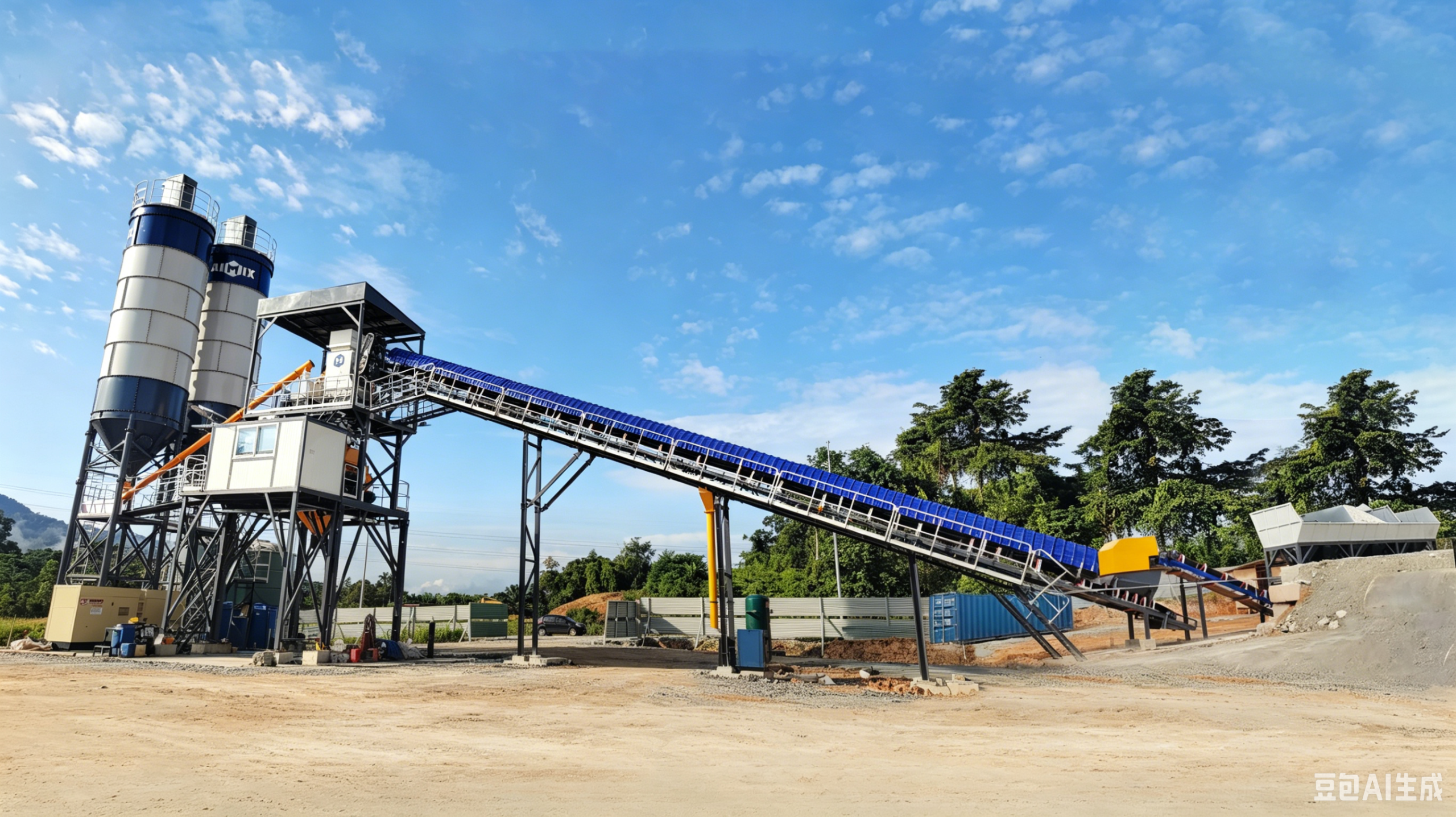
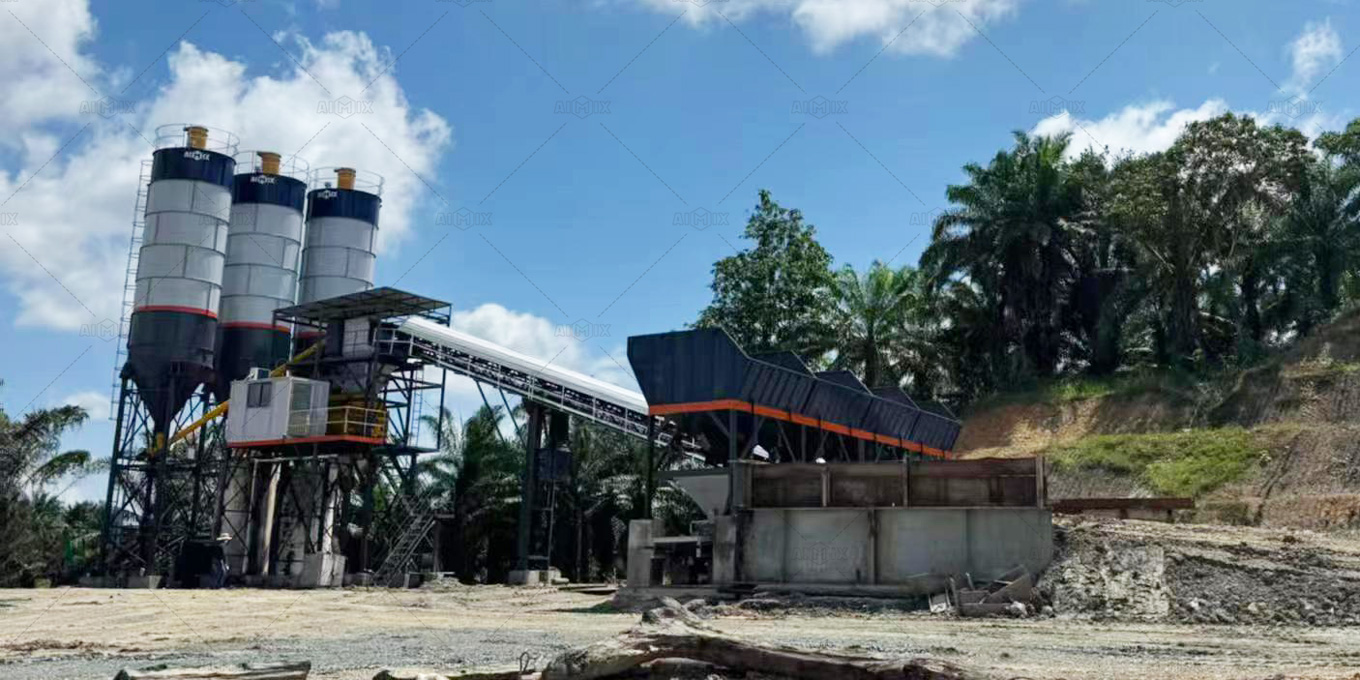
A stationary ready mix concrete plant provides a centralized production facility for supplying multiple pavement sections across an airport development project. Its configuration typically includes aggregate storage and feeding systems, cement silos, weighing equipment, a concrete mixer, and an automated control system. This arrangement allows contractors to manage material proportions and production schedules from one location. Compared with relying on multiple small mixing units, centralized production can simplify quality monitoring and material inventory management. For airport apron construction, where concrete demand may remain substantial throughout successive working shifts, a stationary concrete batching plant in Malaysia offers a production arrangement that can be configured around the project’s overall supply requirements.
Accurate Batching for Specification Compliance
Concrete quality begins with accurate material measurement. Cement, water, aggregates, and chemical admixtures must be proportioned according to the approved mix design. Automated weighing and batching systems help control these quantities and maintain repeatability. Operators can monitor production parameters, identify deviations, and maintain batch records for quality documentation. The mixing system also matters. A twin-shaft compulsory mixer, for example, provides intensive mechanical mixing that helps distribute cement paste, aggregates, and other constituents throughout the batch.
Selecting the Appropriate Plant Capacity for Airport Construction
Calculate Concrete Demand from the Pavement Schedule
Plant capacity should be determined by the expected hourly concrete requirement rather than the total project volume alone. For example, a contractor planning to place 500 m³ of concrete during a 10-hour working period needs an average supply rate of 50 m³/h. However, actual plant capacity must also account for mixer cycles, truck availability, transportation distances, maintenance interruptions, and variations in placement speed. A practical capacity assessment considers: – Total apron and service road concrete volume. – Planned daily placement quantity. – Required continuous pouring duration. – Distance between the batching facility and paving areas. – Number and capacity of transit mixer trucks. – Allowance for equipment maintenance and production interruptions.
Compare Different Stationary Plant Configurations
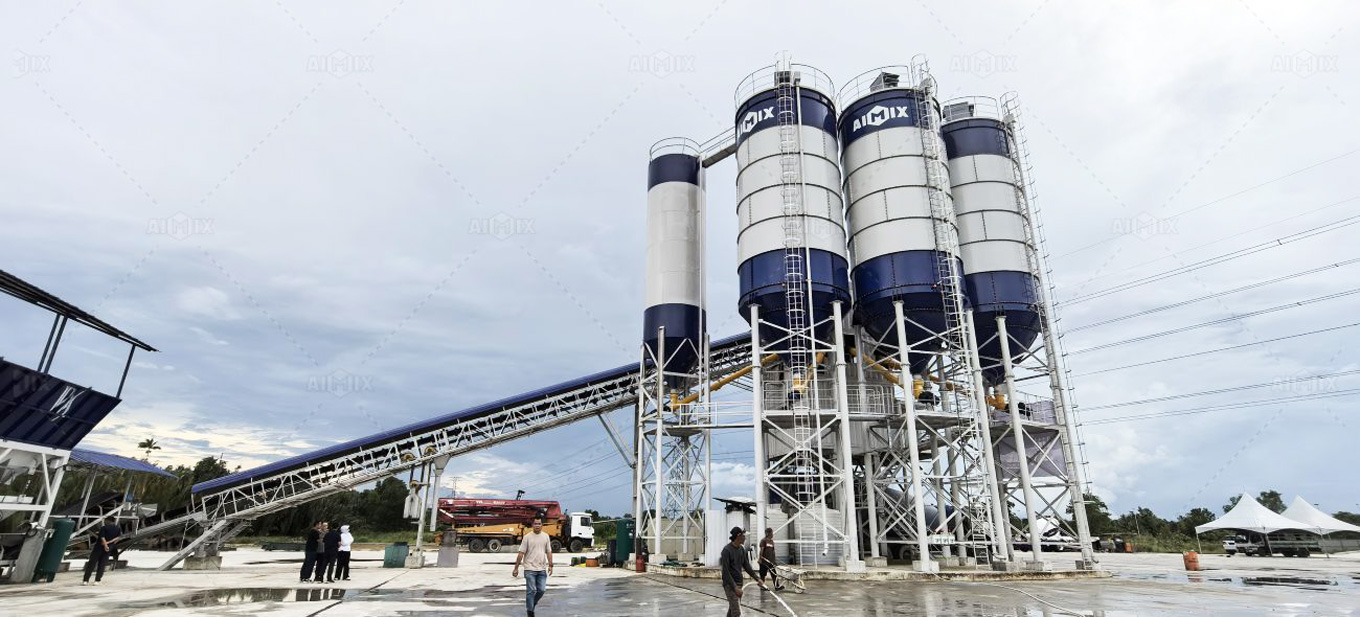
The following capacities illustrate common production configurations contractors may evaluate:
| Plant Model | Rated Capacity | Typical Project Consideration |
|---|---|---|
| AJQ50 | 50 m³/h | Smaller pavement sections and phased road construction |
| AJQ70 | 70 m³/h | Medium-scale apron and service road projects |
| AJQ100 | 100 m³/h | Larger airport pavement construction programs |
| AJQ150 | 150 m³/h | High-volume concrete production requirements |
Rated output is not the same as guaranteed daily production. Actual output depends on the mix design, aggregate feeding, mixer cycle, truck dispatch, and operating conditions. Contractors should therefore select a concrete batch plant for sale with sufficient production headroom without creating unnecessary equipment investment or excessive idle capacity.
Adapting Plant Configuration to Malaysian Site Conditions
Manage Rainfall and Aggregate Moisture Variations
Malaysia’s tropical climate brings frequent rainfall and relatively high humidity. These conditions can complicate aggregate storage and moisture management, particularly when sand and other fine aggregates are exposed to rain. Changes in aggregate moisture directly affect the effective water content of concrete. If moisture corrections are inaccurate, the actual water-cement ratio may differ from the approved mix design. Contractors should consider covered aggregate storage, suitable drainage around stockpiles, regular moisture testing, and automatic moisture compensation where available. Cement silos and electrical control systems should also be protected against moisture ingress.
Plan the Plant Layout Around Airport Construction Logistics
Airport construction sites may have restricted access, designated equipment zones, and strict vehicle movement arrangements. The batching plant location should minimize transit distances while maintaining safe separation from operational airport areas. A suitable layout includes aggregate stockpiles, cement storage, water supply, truck circulation routes, maintenance access, and concrete dispatch areas. Space should also be reserved for future material deliveries and equipment servicing. Where project access is limited or construction takes place in phases, a modular plant configuration can simplify transportation and installation planning.
Coordinating Concrete Production with Airport Pavement Construction
Synchronize Batching Output with Paving Operations
Concrete production and pavement placement must operate as one coordinated process. If batching output exceeds the paving crew’s capacity, transit mixers may accumulate at the site. If production falls behind, the paving operation may experience interruptions. Contractors should establish a dispatch schedule based on the paving machine’s placement rate, truck travel time, and unloading cycle. Communication between the batching plant operator, transport coordinator, and site supervisor helps maintain a predictable concrete supply.
Maintain Quality Control from Batching to Curing
Quality inspections should cover the entire production and placement process. These may include: – Verification of approved mix proportions. – Aggregate moisture and grading checks. – Fresh concrete workability and temperature tests. – Delivery time and batch identification records. – Pavement thickness and surface-level measurements. – Concrete strength testing and curing inspections. Airport pavement quality depends on more than batching accuracy. Proper consolidation, finishing, joint construction, and curing are equally important to long-term performance.
Evaluating Installation, Operating Costs, and Project Utilization
Consider Installation and Supporting Infrastructure
A stationary concrete batching plant for sale requires a suitable foundation, material storage areas, electrical power, water supply, and access for aggregate and cement deliveries. Contractors should include these supporting requirements when evaluating the total project investment. The initial equipment quotation alone does not represent the complete installation cost. Foundation construction, transportation, electrical connections, commissioning, labor, and maintenance should also be considered.
Assess Long-Term Utilization Beyond One Airport Project
Airport infrastructure projects may involve several construction phases, including apron expansion, service road development, maintenance areas, and additional pavement sections. If the plant will support multiple projects, contractors should evaluate its expected utilization period and future production requirements. A stationary installation may provide a suitable long-term arrangement where substantial concrete demand is concentrated around a central production facility. For contractors handling projects in different locations, modular equipment and planned relocation procedures may also influence the overall investment decision.
Conclusion
A stationary ready mix concrete plant can provide the centralized production capacity and batching control required for airport apron and service road construction in Malaysia. However, selecting the right configuration requires more than comparing rated output. Contractors should evaluate pavement specifications, hourly concrete demand, aggregate moisture management, plant layout, transportation cycles, and quality-control procedures together. By aligning production capacity with actual paving requirements and local site conditions, construction teams can maintain a consistent concrete supply and support the demanding performance requirements of airport infrastructure.