When customers ask, “How much does a 50 ton gantry crane cost?” the most honest answer is: it depends. Unlike standardized consumer equipment, a 50 ton gantry crane is a heavy industrial system whose price reflects far more than steel and motors. Capacity alone does not define cost. Design standards, structural dimensions, working conditions, configuration choices, and long-term reliability all play decisive roles.
Understanding where your money really goes is critical – not only for budgeting, but also for avoiding costly mistakes such as under-specification, hidden expenses, or poor lifecycle value. This article breaks down the true cost structure of a 50 ton gantry crane, helping buyers make informed, value-driven decisions rather than focusing on headline price alone.
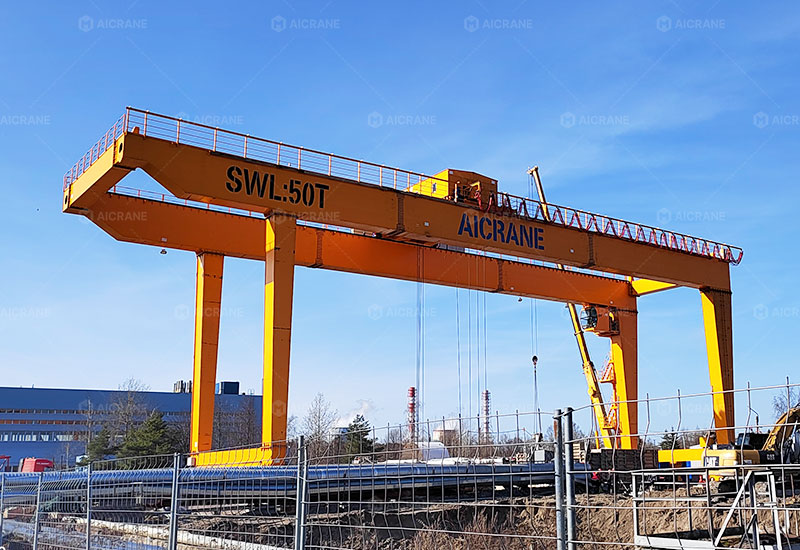
1. Basic Price Range of a 50 Ton Gantry Crane
As a reference point, the standard 50 ton gantry crane price typically falls within a broad range, depending on configuration and market:
-
Single girder gantry crane: Lower initial cost, limited lifting height and duty class
-
Double girder gantry crane: Higher price, better stability, higher duty rating
-
Rail mounted vs rubber tyred gantry crane: Significant cost differences
However, the quoted price you receive is only the starting point. To understand real value, we must examine how that price is built.
2. Steel Structure: The Largest Cost Component
2.1 Main Girders and Legs
For a 50 ton gantry crane, the steel structure typically accounts for 35–50% of the total equipment cost. This includes:
-
Main girders (box girder or truss design)
-
Supporting legs (rigid + hinged or rigid + rigid)
-
End beams and structural reinforcements
Key cost drivers include:
-
Span length (longer spans require heavier steel sections)
-
Lifting height (influences leg height and structural stability)
-
Cantilever design (adds steel volume and engineering complexity)
-
Design standard (FEM / EN standards require higher safety factors)
A crane designed for outdoor wind loads, seismic conditions, or uneven ground will require additional reinforcement—directly increasing material and fabrication costs.
3. Hoisting System: Precision Comes at a Price
3.1 Hoist or Winch Selection
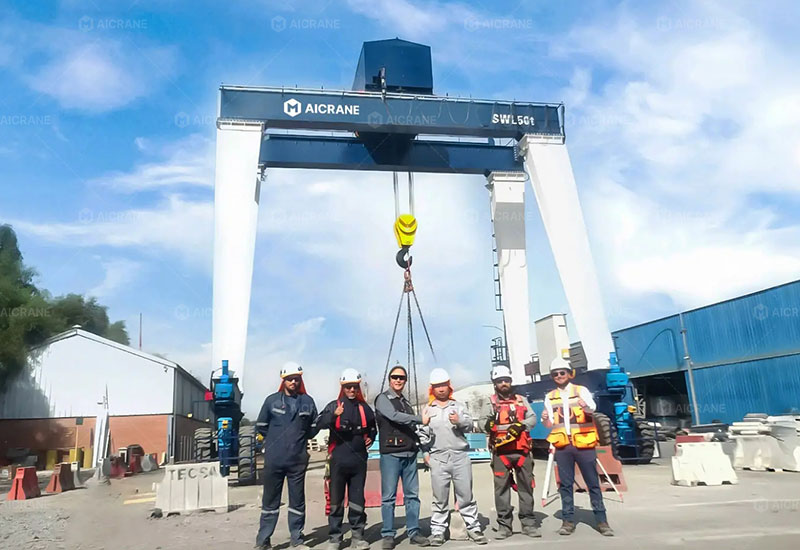
The hoisting mechanism is the heart of the crane and usually represents 15–25% of the total price. For a 50 ton crane, this typically includes:
-
Heavy-duty electric hoist or winch
-
Wire ropes, drums, hooks, sheaves
-
Gearbox, motor, braking system
European-style hoists with compact design, inverter control, and higher duty ratings cost more upfront but offer:
-
Smoother operation
-
Lower maintenance
-
Longer service life
Choosing a low-cost hoist may reduce the initial price, but it often leads to higher downtime and repair costs over the crane’s lifecycle.
4. Electrical System and Control Components
4.1 Electrical Configuration
The electrical system usually accounts for 10–15% of the gantry crane price, covering:
-
Control panels and cabinets
-
Motors for hoisting, trolley, and crane travel
-
Limit switches and overload protection
-
Power supply systems (festoon, cable reel, conductor bars)
The brand and quality of electrical components significantly influence cost. International brands such as Siemens, Schneider, or ABB increase initial investment but enhance reliability and global serviceability.
4.2 Control Modes
Different control options affect price:
-
Pendant control (lowest cost)
-
Wireless remote control (moderate increase)
-
Operator cabin (higher cost due to structure, wiring, ergonomics)
Advanced control systems, such as VFD (Variable Frequency Drive) and soft start/stop functions, add cost but reduce mechanical wear and energy consumption.
5. Travel System: Rail vs Rubber Tyre Cost Impact
5.1 Rail Mounted Gantry Crane (RMG)
Rail mounted 50 ton gantry cranes typically have:
-
Lower crane unit cost
-
Higher infrastructure cost (rails, foundations, civil works)
Rails must be precisely aligned and installed, which shifts part of the project cost outside the crane quotation.
5.2 Rubber Tyred Gantry Crane (RTG)
Rubber tyred versions include:
-
Heavy-duty tires
-
Steering systems (2-wheel, 4-wheel, or multi-directional)
-
Drive axles and suspension systems
These systems significantly increase rubber tyred gantry crane price but eliminate rail construction costs and offer greater flexibility—often reducing total project cost in open yards.
6. Safety Systems: Cost vs Risk
Safety systems are often underestimated during pricing comparisons. For a 50 ton gantry crane, safety-related components may account for 5–10% of total cost, including:
-
Overload protection systems
-
Anti-sway control
-
Emergency stop systems
-
Wind alarms and rail clamps (for outdoor gantry cranes)
-
Collision avoidance systems
While these features increase upfront cost, they reduce accident risk, insurance exposure, and unplanned downtime, making them a cost-effective investment.
7. Surface Treatment and Environmental Protection
7.1 Anti-Corrosion Measures
If the crane operates outdoors, in coastal areas, or in corrosive environments, surface treatment becomes a critical cost factor:
-
Sandblasting grade (Sa2.5 vs Sa3)
-
Multi-layer epoxy or polyurethane coatings
-
Increased paint thickness and curing processes
Higher anti-corrosion grades increase manufacturing cost but significantly extend service life, especially in marine, port, or chemical environments.
8. Engineering, Design, and Customization Costs
Every 50 ton gantry crane project involves engineering work, which is often invisible in quotations but essential to performance and safety.
Engineering costs include:
-
Structural calculations
-
Load and fatigue analysis
-
Electrical and control system design
-
Compliance with local standards and certifications
Customized cranes—non-standard spans, special lifting devices, or unique site constraints—require additional engineering hours, which are reflected in the final price.
9. Installation, Transportation, and Commissioning
9.1 Logistics and Shipping
Large gantry cranes are transported in sections. Costs depend on:
-
Crane size and weight
-
Distance to project site
-
Local transport regulations
9.2 Installation and Commissioning
Buyers often overlook these costs, which may include:
-
On-site installation supervision
-
Load testing and commissioning
-
Operator training
Choosing online installation guidance vs full on-site service also affects total project cost.
10. The Hidden Cost: Lifecycle Value
The lowest-priced 50 ton gantry crane is rarely the most economical choice. True cost must consider:
-
Energy consumption
-
Maintenance frequency
-
Spare parts availability
-
Downtime and productivity loss
-
Service life (15–25 years vs 8–10 years)
A higher initial investment often results in lower total cost of ownership (TCO) and faster return on investment.
Conclusion: Price Is What You Pay, Value Is What You Get
A 50 ton gantry crane is not a commodity—it is a long-term industrial asset. The price reflects steel, engineering, safety, reliability, and service capability. Understanding the price breakdown allows buyers to compare quotations on a fair basis and avoid decisions driven purely by headline cost.
When evaluating suppliers, the key question should not be “Who offers the lowest price?” but rather:
“Who delivers the best long-term value for my application?”
That is where your money truly goes.